

If you’ve spent any time working with kids, you know how quickly a small disruption can throw off the whole group. A student refuses to sit down, starts disrupting the peace, or tosses a pencil in the air right in the middle of your instructions — and every part of you wants to stop and address it.
That instinct comes from a good place. You care about your students, you want things to run smoothly, and you want to help kids make better choices. But responding to every minor behavior — even calmly — can sometimes make them happen more.
When a child discovers that a certain behavior gets a reaction, that behavior gets reinforced. Even a gentle “stop that” can signal to a child: this works. Over time, the behavior sticks around because it’s doing exactly what behavior is designed to do — get attention.
In our programs at Wings for Kids, we use a simple, research-aligned technique to manage these behaviors and we call it Disregard & Divert (D&D). When adults consistently practice this technique, it has the ability to meaningfully shift the dynamic in your program or classroom environment.
What Is Disregard & Divert?
At its core, Disregard & Divert is about choosing where to put your energy. Instead of reacting to every minor misstep, you intentionally redirect your attention — and the child’s — toward the positive. It’s not about ignoring kids completely. It’s about being strategic with your responses so that good behavior gets the spotlight, not the disruptive kind.
It works in two steps, and you can start practicing them today.
Step 1: Disregard the Behavior
When a minor negative behavior pops up, your goal is to let it go completely — no eye contact, no verbal response, no visible reaction. Act as if you didn’t notice.
We know — easier said than done! In the middle of a busy group session, your instincts are going to kick in hard. You’ll want to say “put that down” or “stop making that noise.” It takes real practice and self-awareness to pause and let it pass.
But here’s the payoff: when you don’t react, you’re not feeding the behavior. And you’re keeping the rest of the group on track instead of pulling everyone’s attention toward the disruption.
Behaviors that can typically be disregarded include:
- Fidgeting or restlessness
- Tapping or low-level noise-making
- Refusal to participate
- Not following instructions exactly
- Minor disruptions like tossing small objects
Behaviors that should never be disregarded include:
- Hitting or physical aggression
- Threatening language
- Cursing
- Anything that could be harmful to the child or others
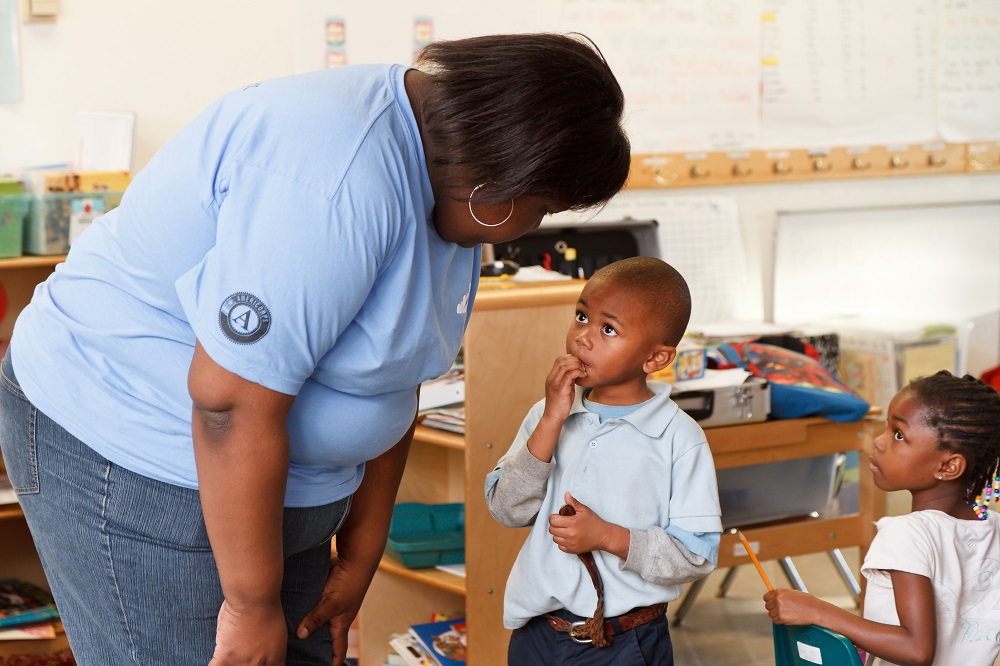
When safety is a concern, always step in. D&D is a tool for the small stuff — the everyday moments that don’t require a full stop but can easily derail your session if you let them.
Step 2: Divert Their Attention
Once you’ve let the behavior pass without reacting, it’s time for the second step: gently guide the child back to what they’re supposed to be doing — without ever bringing up the disruptive behavior. This is where your creativity and warmth as an educator really shine.
The goal is to give the child a positive, purposeful path back to the group.
Example scenario: A student is drumming loudly on the desk while you’re giving instructions for an art project.
Instead of saying, “Robert, stop banging on the table,” you might try:
- “Robert, would you mind helping me pass out the paintbrushes?”
- “Hey Robert, while I finish going over the directions, can you jot down the paint colors you want to use?”
- “I can tell you’re excited to get started — as soon as everyone can hear the instructions, we’ll jump right in!”
Notice what these responses have in common: they invite Robert back in. They give him something meaningful to do and a reason to re-engage — without putting him on the spot or making the moment feel adversarial.
Why This Works (and Why It’s Worth the Effort)
Children who act out during structured activities are often communicating something — a need for connection, stimulation, or a sense of belonging. When we correct constantly, we can unintentionally put kids on the defensive. When we redirect warmly, we’re saying: I see you, and I believe you can do this.
Over time, staff who practice D&D consistently find that minor disruptions naturally decrease. Not because kids are being suppressed, but because the behaviors simply stop working — and kids find better ways to connect and engage.
A Simple Check-In for the Moment
When a minor disruption happens, try asking yourself:
- Is this a minor behavior I can let go? If yes, take a breath and resist the urge to correct.
- Am I accidentally giving it attention? Even a glance counts — redirect your own focus first.
- How can I bring this child back in? Think of a positive role or gentle reminder that meets them where they are.
It takes practice, and there will be moments where you catch yourself mid-correction and have to course-correct. That’s completely normal — and it’s part of growing as a youth-serving professional. Be patient with yourself, just as you are with your students.
The more you practice Disregard & Divert, the more natural it becomes. And the more your energy stays focused on what you do best: building relationships, fostering engagement, and helping kids thrive.