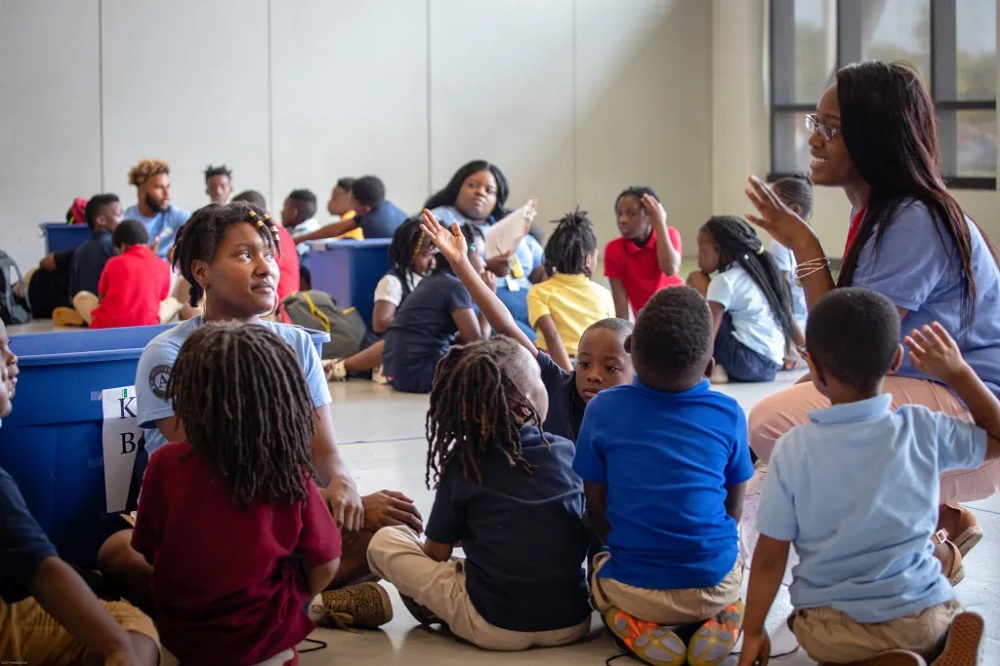
Community Unity is designed to be high-energy and fun — but energy without structure can quickly become noise without purpose. The 12 techniques below are the tools Wing Leaders reach for to keep a group focused, engaged, and safe without killing the vibe. They fall into three categories: in-session management, proactive and transition tools, and recognition and reinforcement.
In-Session Management
01 Talking Stick
The talking stick manages dialogue during every SE Lesson — it signals who has permission to speak, and it only works if it’s used every single time. When a student wants to speak, they raise their hand and the stick is passed. Acknowledge multiple kids and announce a speaking lineup; no one should be sitting with a hand in the air.
Tip: There are no substitutes. Only a Program Coordinator or Coach may approve an alternative.
02 Attention Getters
Call-and-response brings the group back when energy spikes — without raising your voice. Pick 2–3 phrases your group knows well and use them consistently. The more familiar they become, the faster kids respond.
Tip: Sample phrases: “Macaroni and cheese…” / “Everybody freeze!” or “Hocus pocus…” / “Time to focus!”
03 Three E’s
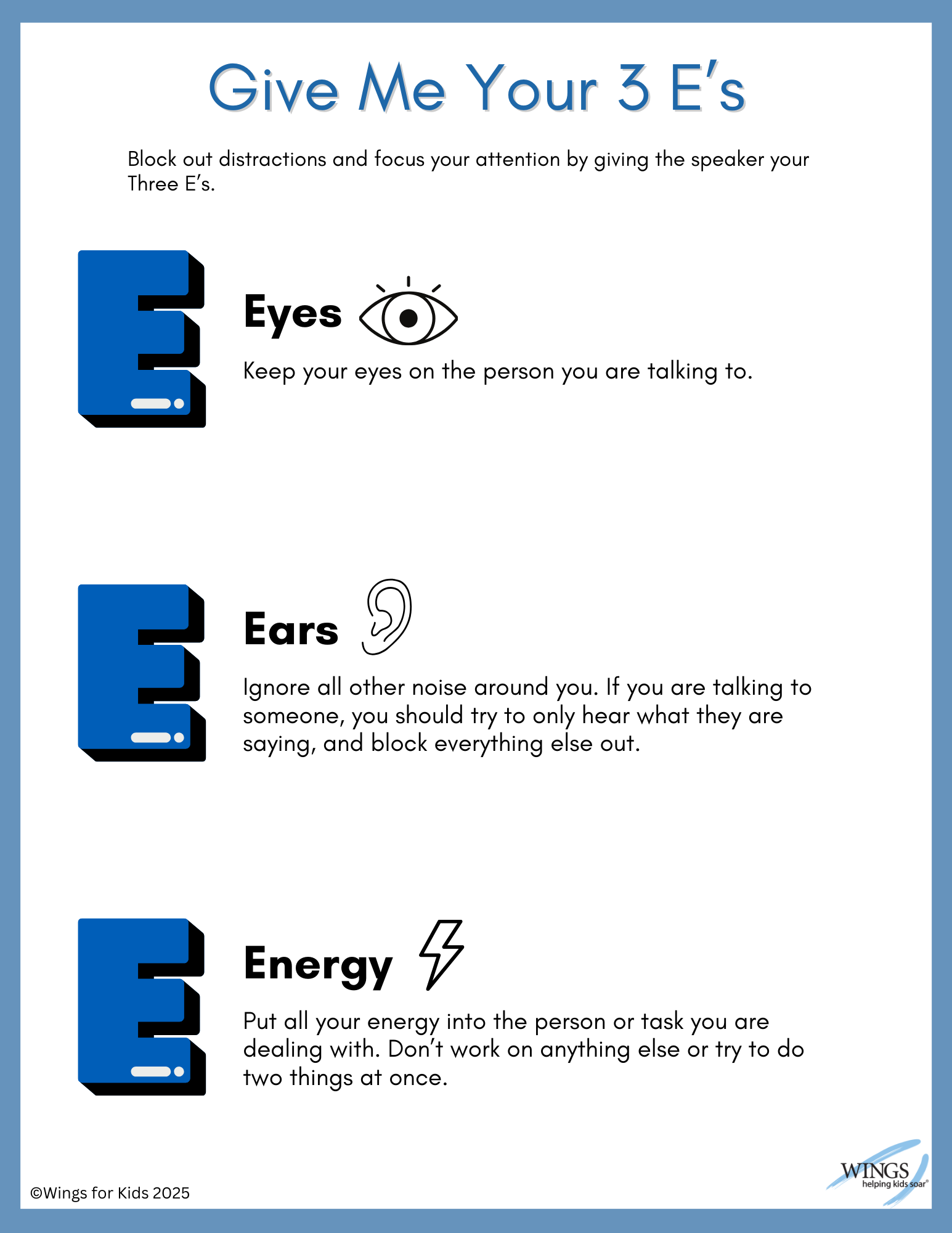
“Give me your Three E’s” names the specific behaviors you need before giving instructions or starting an activity:
Eyes on the person or task
Ears filtering out other noise
Energy fully on that one thing. It’s more precise than “pay attention.”
Tip: Use this before giving instructions, starting an activity, or any time you need the group fully tuned in.
04 Proximity
Moving physically closer to a distracted child — without saying a word — communicates awareness and care without drawing attention to the behavior. Make eye contact and give a small nod as you move closer so the child knows you see them without making it a public moment.
05 Non-Verbal Signals
A look, a nod, a thumbs up, or a hand signal can redirect behavior, affirm a child, or signal a transition — all without interrupting the group. Build a shared vocabulary of signals with your nest at the start of the year; consistent use makes them fast and effective.
06 Voice Modulation
When the room gets loud, do the opposite of raising your voice. Dropping to a quiet, deliberate tone creates curiosity and pulls kids in. It also models the self-regulation you’re trying to build in them.
Tip: Try whispering the start of your next instruction and watch the room settle. When the room gets loud, do the opposite of raising your voice. A calm, measured tone models the self-regulation you’re trying to build in kids.
Proactive & Transition Tools
07 Helping Out
Giving kids a job during Community Unity — distributing materials, bringing snacks to their nest — keeps them engaged and is a proactive behavior strategy: kids who are doing something positive are less likely to seek attention through disruptive behavior.
Tip: Rotate the helper role so every kid gets a turn. It builds ownership and keeps the novelty alive.
08 Waiting Games
Transitions and wait times are prime moments for boredom and off-task behavior. A quick waiting game keeps energy engaged while the group settles or materials are gathered. A well-timed waiting game can make the difference between a smooth transition and a spiral.
Tip: Keep 3–4 go-to waiting games in your back pocket so you’re never caught flat-footed during a transition.
09 Countdowns
A countdown creates urgency and a clear endpoint without chaos. “You have 30 seconds to finish up and get back to your spot” works far better than the open-ended “wrap it up” that never actually ends.
Tip: Be consistent — if you say 30 seconds, mean 30 seconds. Kids learn quickly whether countdowns are real or not.
10 Brain Breaks
A brain break is a short, planned physical or playful reset between segments — an intentional energy release, not a gap-filler. Unlike waiting games, brain breaks are built into your session structure where energy tends to dip.
Tip: Keep brain breaks short and snappy — 60 seconds is usually enough. Go longer and it becomes hard to bring the group back.
Recognition & Reinforcement
11 Specific Praise
Generic praise fades quickly. Specific praise names exactly what a child or nest did right — and when said loud enough for others to hear, it shapes the behavior of the whole group. Catch kids doing the right thing before problems start; specific praise is most powerful when it’s proactive, not reactive.
Tip: Example: “I love how Marcus waited until he had the talking stick before sharing.”
12 Nest Shout-outs
Publicly recognizing a whole nest builds group identity, peer accountability, and healthy pride. When one nest is called out for doing something well, other nests notice — and often rise to the same standard.
Tip: Make shout-outs a regular part of your closing ritual so every nest has the chance to be recognized over time.
Keep this guide handy. These 12 tools work best when they become second nature — used proactively, not just as a reaction when things go sideways. Review them before sessions, debrief on what you reached for, and keep building your repertoire.