
Kids are natural observers. They notice everything – from how we handle stress to how we respond when things don’t go according to plan. When we model accountability in our daily interactions, we’re teaching them that taking ownership isn’t about being perfect; it’s about being human with our words and actions.
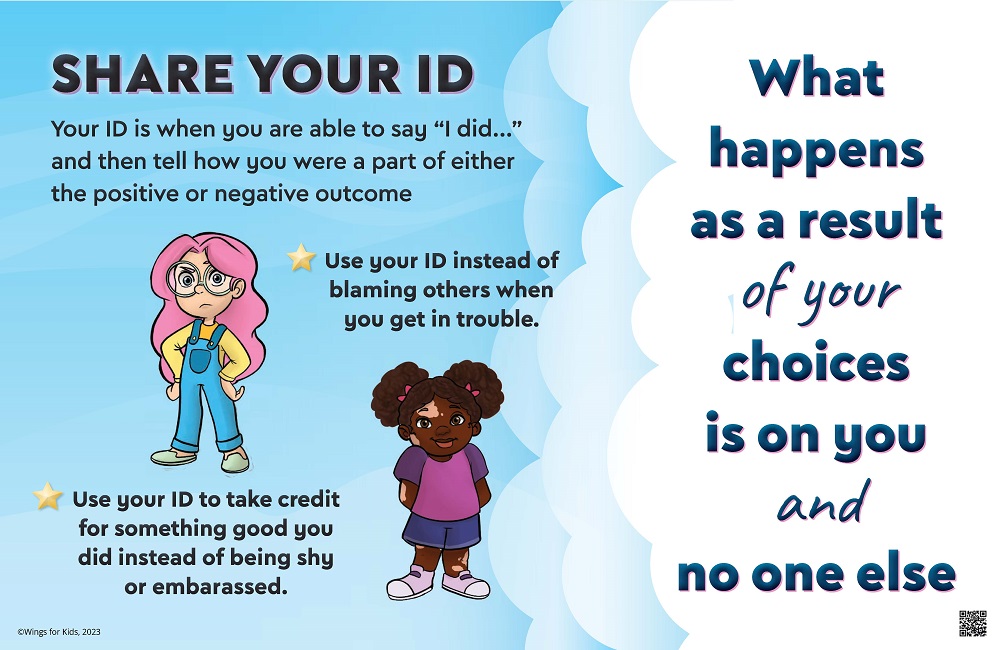
At WINGS, we model and teach accountability through a teaching practice called “Share Your I.D.” Your “ID” is when you are able to say, “I did…” and then tell how you were a part of either a positive or negative outcome.
For example, you use your “ID” instead of blaming others when you make a bad choice.
“I’m sorry I was late. I didn’t plan ahead and leave early enough to be here on time.”
You also share your “ID” to take credit for something good you did instead of being embarrassed to be successful.
“I’m really proud of how this turned out. I put a lot of effort into this project and it was worth it.”
The beautiful thing about “Share Your I.D.” is how it normalizes accountability as a regular practice, not something reserved for major mistakes. When we adapt this concept for adults working with children, we create opportunities to demonstrate that accountability is a strength, not a weakness.
Three Steps to Strengthen Your Accountability Muscle
Practice the Pause
Before we can model healthy accountability, we need to develop awareness of our own actions and reactions. Consider building in small moments throughout your day to check in with yourself. After a challenging interaction with a student, take a breath and ask: “What just happened there? What part did I play in that situation?”
This isn’t about harsh self-judgment – it’s about honest self-reflection. Maybe you’ll realize you were rushing and didn’t give a child your full attention, or perhaps you’ll recognize that your tone was sharper than intended because you were stressed about something else entirely. These realizations become the foundation for genuine accountability.
Try setting gentle reminders on your phone or creating a simple end-of-day reflection routine. The goal is to build the habit of noticing patterns in your behavior before they become problems that require bigger “I did” conversations.
Embrace the “Oops” Opportunity
When we make mistakes in front of kids – and we all do – we have a choice. We can gloss over it, make excuses, or blame external circumstances. Or we can lean into the discomfort and model what healthy accountability looks like.
Consider how powerful it is when an adult says to a child: “I did interrupt you when you were trying to tell me something important, and that wasn’t respectful. I’m going to work on listening better.” This simple acknowledgment teaches kids that everyone makes mistakes, that it’s possible to own them without shame, and that apologies can be followed by genuine efforts to improve.
The key is authenticity. Kids have a wonderful ability to recognize genuine sincerity, which is why authentic apologies resonate deeply with them. When we’re genuine about our mistakes and our commitment to do better, we’re modeling emotional maturity and showing them that growth is always possible.
Celebrate Your Growth Moments
Accountability isn’t just about owning up to mistakes – it’s also about recognizing when we’ve grown or made positive choices, especially difficult ones. This mirrors the positive side of “Share Your I.D.”
Consider sharing moments when you’ve pushed yourself outside your comfort zone, stood up for something important, or made a better choice despite it being more difficult. Maybe you advocated for a student who was struggling, or you admitted to a colleague that you needed help with a challenging situation. These “I did” moments of growth are just as important to acknowledge.
When children see adults taking credit for positive growth and difficult decisions, they learn that self-advocacy and personal development are worthy of recognition. It normalizes the idea that we’re all works in progress, constantly learning and improving.
The Ripple Effect
The beautiful thing about modeling accountability is its contagious nature. When kids see the adults in their lives owning their actions with grace and honesty, they’re more likely to develop these skills themselves. They learn that accountability isn’t punishment – it’s empowerment.
The modeling doesn’t stop with kids – when adults see their colleagues taking authentic ownership of both successes and missteps, it allows everyone to practice more honest accountability.
Remember, perfect accountability doesn’t exist. The goal isn’t to never make mistakes or to catch every misstep immediately. Instead, we’re aiming to create a culture where taking ownership feels safe, where growth is celebrated, and where “I did” becomes a phrase associated with both courage and learning.