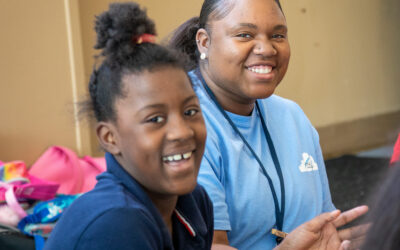

Try as we might to keep kids in good spirits and engaged in learning, there are no perfect days. Despite our attempts to manage behavior proactively, sometimes problem behaviors still occur. When these behavior issues occur, we employ seven quick and easy techniques called GET PAST to calmly deal with problem behaviors and move past them.
What Is GET PAST?
Teachers, staff, and even parents can use the letters in the acronym GET PAST when behavioral issues occur. It’s important to keep in mind that not every technique will work for every child. You will often have to try several techniques before finding one that has a positive effect and truly shapes a child’s behavior.
G – Give choices
E – Experience consequences
T – Take it away
P – Problem (State it)
A – Amends (Show them how to fix it)
S – State feelings strongly
T – Tell it in a word
For a deeper dive into behavior management strategies, including GET PAST, take a look at our video.
How To Implement GET PAST
When students act out, the first step is to remember that behavior is a form of communication. Keeping this in mind, you can respond to the reasons for student behavior and not simply react to or correct the behavior itself. Remember, giving a punishment on the spot—like losing a privilege—can make things worse.
Figuring out the reasons helps you pick an appropriate response or support. It also allows you to be proactive in identifying ways to prevent behavior issues in the future. Let’s take a look at each technique in GET PAST to help you understand the different strategies you could use in different situations.
Give Choices
When a student is not completing the task at hand or misbehaving, give the student two positive alternatives to choose from. It might take some creativity to think of two alternative options, but this strategy helps to deescalate the situation, while at the same time, helping children feel empowered to make their own choices.
Example: “Savannah, you can either sit down and begin your math worksheet, or you can sit down and begin your reading homework. Walking around the room and chatting with friends is not an option. What is your choice? Math or reading?”
Quick Tip
Be sure the choices you offer are both positive choices and match the behavior you want to see. The goal is to end the problem behavior and have the student make a good choice. Also, don’t make a punishment one of the choices. If one choice is a punishment, then it’s not really a choice—it’s a threat.
Saying something like “You can come sit up front with me or I’m calling home” is not empowering the child to make a choice that is best for them. It’s instead giving them one choice and one negative consequence.
Experience Consequences
If a child is engaging in negative behavior, you can either allow them to experience a natural (self-imposed) consequence as a result of their behavior, or you the adult can enforce a timely consequence directly related to the behavior. There are two important tips to remember for this strategy to be successful.
- Make the consequence timely. The consequence should be immediate or very close to the time of the negative behavior. This helps the student make the connection between their behavior and the consequence. If a negative behavior happened at the beginning of the day, a consequence at the end of the day would not be effective.
- Relate the consequence to the behavior. Be sure the consequence is directly related to the negative behavior and explain the consequence in a way that helps the child reflect on what happened because of their choices.
See the examples below for both natural (self-imposed) and adult-directed consequences.
Natural: A child is running when they should be walking. You remind them to walk, but they continue to run. This leads to them dropping their craft project and it breaking. You could tell them, “Sorry, you made the choice to run when I asked you to walk. Now, you have dropped your craft and it is ruined. We don’t have time to make another one.”
Adult-directed: A child is pushing other children in the kickball line. Pull them aside and let them know they broke one of the rules and therefore, the consequence is to miss their turn. If they want to kick on their next turn, they need to practice their self-control.
Take It Away
Sometimes misbehavior can be triggered by an item. In some instances, managing the behavior can be as simple as taking the item away, especially if the item is putting the child or anyone else in harm’s way (in which case, take the item away immediately). To avoid a power struggle, here are some DO’S and DON’TS to remember with this technique:
Use a confident and assertive tone of voice and tell the child to give you the item.
Offer options for where the item goes. Give two positive alternative choices for what happens to the item.
For example, “Jackson, I can hold on to that, or I can give it to Ms. Brown to hold on to it for you until after class. Which do you prefer?”
Tell them exactly when the item will be returned.
Don’t grab an item out of a child’s hand. This could feel like an attack and trigger a negative reaction.
Don’t tell the child you are taking the item away permanently. (Unless it’s dangerous!)
Problem (State It)
This technique is the most popular behavior management strategy because while it’s simple, it can have a powerful impact on kids by letting them make the choice to find solutions to their behavior.
When a child is misbehaving, state the problem then give them a chance to figure out how to fix it. Here are a few tips to ensure success with this technique:
- Keep it simple! Say what the problem is without making it sound like a question. For example, “Veronica, you are talking while I’m giving instructions.”
- Let the student figure out what the solution is on their own. Don’t offer ideas or suggestions. Let them use their critical thinking skills to decide what to do next.
- Acknowledge and praise the student when they fix the problem. By praising their good choices, you are empowering them to make more good choices in the future.
- Avoid asking rhetorical questions like, “Why did you throw your pencil?” These questions are unhelpful in coming up with a solution to the behavior. Simply state the problem instead.
Amends (Show Them How To Fix It)
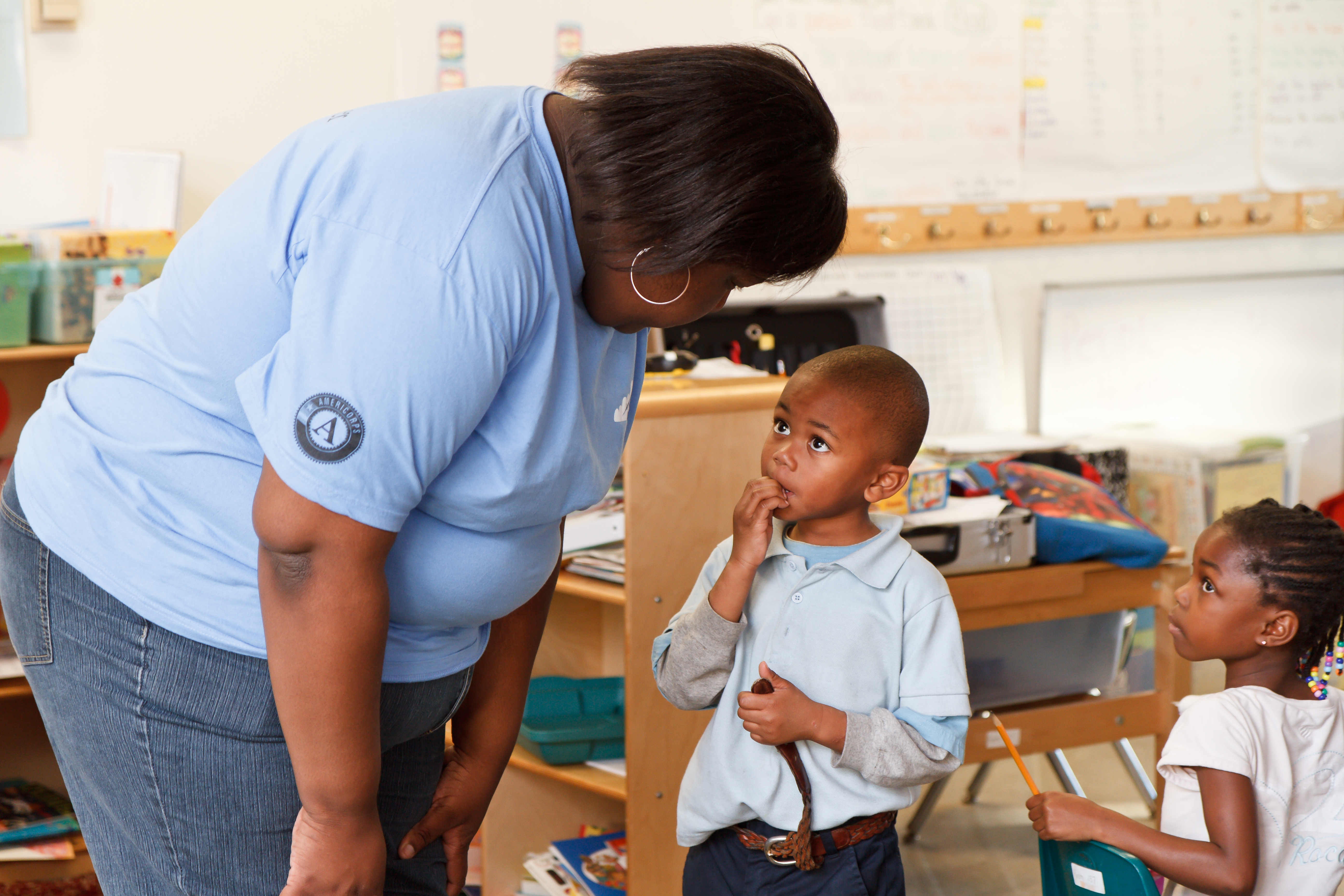 Students can learn from their negative behaviors. To make amends, task the students with taking responsibility for their actions and fix the problem. If they need help, assist them in brainstorming ways that they could approach and handle the situation differently in the future.
If a student only says, “I’m sorry” and walks away, they haven’t learned anything from the situation. Work together with the student to find a solution, fix it, then help the student learn from the problem so it doesn’t happen again.
Engage the student in a “redo” by asking, “If you could do things differently next time what would you do?” You might need to help by suggesting some ideas.
Example: “Reed, you were talking over Cole while he was trying to share his ideas with the group. Step into his shoes for a moment. How do you think that made him feel? What is something you could do differently next time?”
State Feelings Strongly
Give your students an opportunity to step into your shoes and see how it makes you feel when they are misbehaving. Choose a strong word to describe how you felt when the child decided to make a negative choice. Keep in mind these three things when you state your feelings strongly:
-
Be aware of your facial expression, body language, and tone of voice. Make sure your tone and body language match your words. We communicate things verbally and non-verbally, so make sure your facial expression, body language, or tone of voice match the words you are using.
For example, saying, “I’m really frustrated that you’re talking out of turn!” but smiling while saying it will likely guarantee that the technique won’t work.
-
Use a variety of emotion words. You are teaching when you model self-awareness and name how you are feeling. Using a variety of emotion words helps your students expand their emotional vocabulary.
For example, instead of saying you are mad, you might say you are frustrated, disappointed, or afraid.
-
Match your choice of emotion word with something that the student will care about.
Saying, “I’m disappointed that you are running around!” if you don’t have a strong relationship with the child may not change the behavior. Try instead, “I am worried that you might get hurt.”
Tell It In A Word
If a child is acting out, try using one word that indicates the positive behavior or action you want to see. Determine what it is you want the student to do, then simply say it in a single word.
Remember to keep it positive! Instead of saying “Put that down!” “Stop” or “No!,” you can use words like, “Manners.” or “Line.” Repeat the word until the action is taken. It’s okay to say the word more than once. It might take 3-5 times for the student to display the behavior you’ve asked for. But as with all of these techniques if the student isn’t responding after 4 or 5 times, try a different technique.
Tips for Effective Facilitation and Implementation
- You don’t need to use GET PAST in order, simply use the one that you think will best address the situation, or even combine a couple of them together when appropriate. As you start to use the GET PAST techniques you will learn which ones work better for each of your students.
- Find out what’s causing the behavior. Kids act out for all kinds of reasons. Knowing why it’s happening lets you give them the support they need.
- Manage your own emotions and behavior when kids act out. Staying calm helps you think about the best way to handle the situation. And it gives kids the chance to collect themselves so you can talk about what happened.
- Help kids learn from your example — both in the moment and over time. Talk about other situations where you’ve been frustrated or angry and what you did to stay calm and solve the problem.
Next Steps
Just like positive feedback as a proactive behavior management technique is supportive, empowering, and respectful to students, so too is corrective feedback. Learn how to effectively use corrective feedback as a tool to help you correct behavior issues while also increasing children’s social emotional skills.