

Self-awareness and self-management help students understand and manage their big feelings. In this mini-lesson, students will learn to:
- Recognize and identify the different levels of anger, from “partly cloudy” (bothered) to “thunderstorm” (furious).
- Distinguish between the intensity of different feelings and their cues.
- Identify triggers for angry feelings and practice coping strategies to “weather the storm.”
Whether used in classrooms, small groups, afterschool programs, or one-on-one settings, this lesson equips elementary students with essential skills for emotional regulation and healthy anger expression. It helps them navigate their “storm patterns” with confidence and resilience.
Forecasting Your Feelings
Grades K-2 Mini-Lesson
Time Allotted
20-25 minutes
Materials
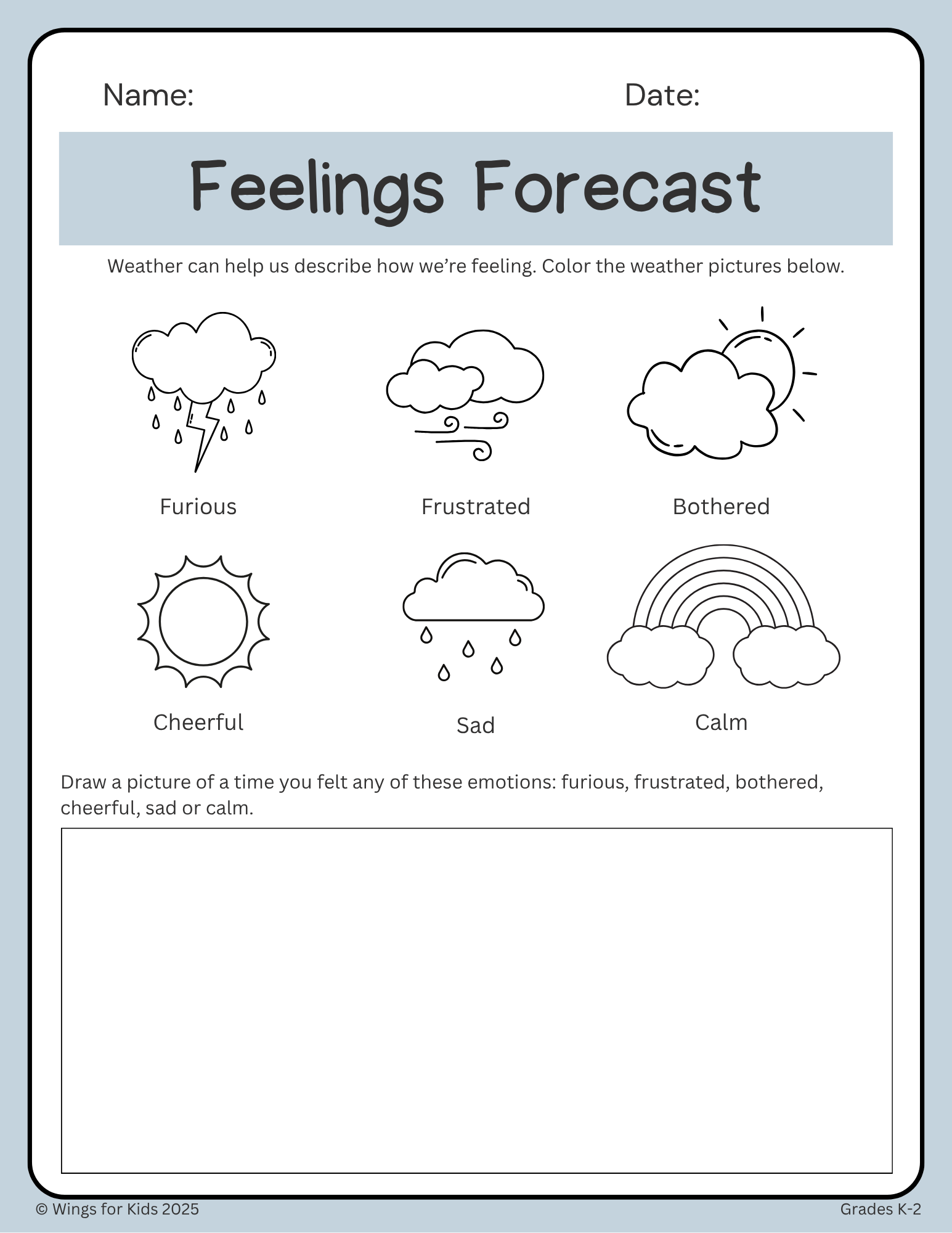
- Weather & Feelings worksheet download
- Crayons or markers
Objective
Students will identify and express different levels of anger using weather metaphors (sunny, cloudy, rainy, stormy) to build emotional awareness and vocabulary.
Introduction (5 minutes)
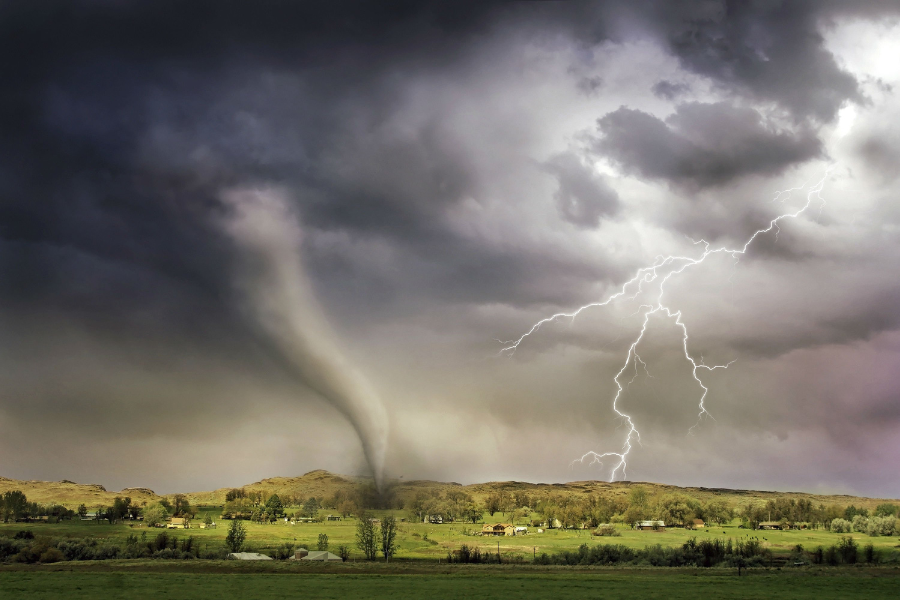
Begin by showing pictures of different weather conditions and asking students to describe each one. Say: “Today we’re going to learn that our feelings can be like the weather! Sometimes we feel sunny and happy, but other times we might feel stormy and angry. Just like weather changes, our feelings change too.”


Activity (10-12 minutes)
- Distribute the Weather & Feelings worksheet
- Talk about the types of weather shown on the worksheet:
- “When you’re a little annoyed, you might feel partly cloudy”
- “When you’re sad or lonely, you might feel rainy”
- “When you’re very angry or even furious, you might feel stormy”
- Read scenarios and have students point to the matching weather:
- “Your friend won’t share a toy” (cloudy/rainy)
- “Someone broke your favorite crayon” (rainy)
- “Someone hurt you on purpose” (stormy)
- Explain the instructions. Students should color in the weather pictures and then draw in the space provided a time when they have felt any of the emotions listed.
- Students can share with a partner or the class their drawings if they feel comfortable.
Discussion Prompts
- “What does your body feel like when you’re __________ (excited, angry, lonely, annoyed)?”
- “Share a time when your “weather” changed unexpectedly. What did you do?”
- “What can we do when we feel stormy to calm down?” (Talk about taking deep breaths, counting to 10, talking to a trusted adult)
- “Can weather change? Can our feelings change, too?”
Closing (3-5 minutes)
Practice calming strategies together: “When we feel stormy, we can take deep breaths like we’re blowing clouds away.” Lead 3-5 deep breaths. Remind students: “All feelings are okay, but we need safe ways to show them. You can always tell a grown-up your ‘weather report’ when you need help!”
Weather Intensity
Grades 3-5 Mini-Lesson
Time Allotted
25-30 minutes
Materials
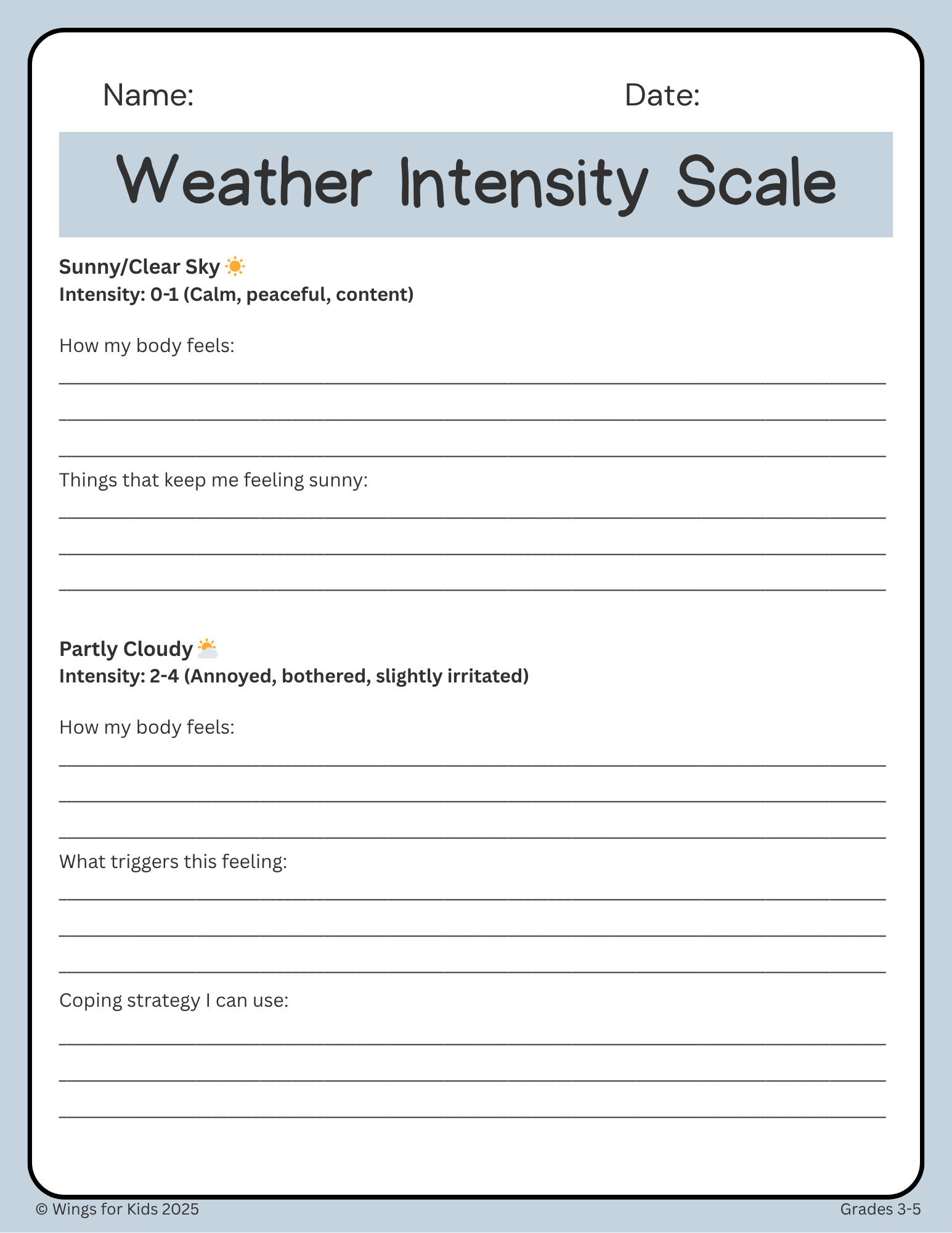
- Weather Intensity Scale worksheet download
- Pencils/pens
- Chart paper or whiteboard
- Optional: feelings thermometer visual
Objective
Students will recognize and articulate varying degrees of anger using a weather-based intensity scale, identify personal triggers at each level, and develop appropriate coping strategies for different anger intensities.
Introduction (5 minutes)
“Has anyone ever been told to ‘calm down’ when you were angry, but it didn’t help? That’s because anger isn’t just one feeling – it has different levels, like a scale from 1 to 10. Today we’ll use weather to understand these levels, because just like weather can go from calm to stormy, our anger can too.”
Create a quick class brainstorm on the board:
- What words describe small anger? (annoyed, irritated, bothered)
- What words describe big anger? (furious, enraged, explosive)
Activity (12-15 minutes)
- Distribute the Weather Intensity Scale worksheet
- Explain the 5 weather levels:
- Sunny/Clear (0-1): Calm, peaceful, content
- Partly Cloudy (2-4): Annoyed, bothered, slightly irritated
- Cloudy/Overcast (5-6): Frustrated, aggravated, upset
- Rainy (7-8): Angry, mad, furious
- Thunderstorm (9-10): Explosive, out of control, rage
- Students complete worksheet sections:
- Identify physical sensations at each level
- List personal triggers/situations
- Match appropriate coping strategies to each level
- Partner share: Students discuss one trigger and their “early warning signs” with a partner
Discussion Prompts
- “Why does it seem easier to calm down when you’re ‘partly cloudy’ versus ‘thunderstorm’?”
- “What are some warning signs that you’re moving from cloudy to rainy?”
- “Do different situations deserve different levels of anger?”
- “What’s the difference between feeling anger and acting on anger?”
- “Who can you talk to when you’re at different weather levels?”
Closing (3-5 minutes)
Introduce the concept of “weather tracking”: “This week, notice your anger weather. When you feel yourself going from sunny to cloudy, that’s the perfect time to use a coping strategy. It’s much harder to stop a thunderstorm than to clear away a few clouds!”
Have students write one commitment: “This week, when I notice I’m feeling _______ (weather), I will try _______ (coping strategy).”
Remind students: “Meteorologists predict weather so people can prepare. You can be your own feelings meteorologist!”
Weathering Many Emotions
These mini-lessons give kids a simple, relatable way to talk about anger without shame or confusion. Just like you check the weather before going outside, students can learn to check their own “emotional forecast” and ask for help before the “storm” hits. When a child can say “I’m feeling cloudy today” or “I’m in a stormy mood,” you’ve given them something invaluable—the words to express what’s happening inside and the understanding that all feelings are okay and will pass.