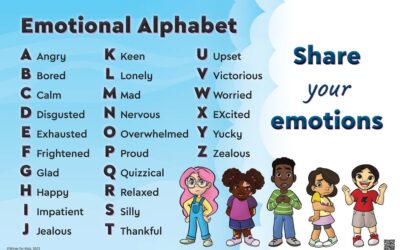
Research in social-emotional learning tells us that children who can identify and name their emotions with precision are better equipped to regulate their behavior, build healthy relationships, and ask for help when they need it. This is called emotional vocabulary, and like any vocabulary, it grows with exposure and practice.
How to use this activity:
As you work through the word search with your students or child, encourage them to say each word out loud as they find it. Ask open-ended questions like, “Have you ever felt that way?” or “When you feel this way, what happens in your body?” (sweating, making fists, fluttering stomach, etc.)
For younger children, you may want to read the words aloud together and explain more in depth what they mean, or give an example situation of when they might feel that way. Older children can work more independently and then share their reflections with the group.
There are no wrong answers here. The goal is simply to expand the emotional language children have available to them — one word at a time.
Mini-Lesson: Building Emotional Vocabulary
Objective:
Students will grow their emotional vocabulary
Grade:
K-5
Materials:
Introduction:
- Begin by saying: “You probably already know some words that describe how you feel. Maybe you use words like happy, sad, or mad. Those are great words! They help people know if you’re feeling good, bad, or upset. But here’s something cool — there are so many more words you can use to name your feelings!”
- Give an example: “Think about it this way: Imagine you only had three crayons to draw a picture — red, blue, and yellow. You could make a drawing… but what if you had 64 crayons? Your picture would be so much more colorful and detailed! Feelings work the same way. The more feeling words you know, the better you can show people exactly what’s going on inside. Instead of just saying “I feel sad,” you could say “I feel lonely” or “I feel disappointed” or “I feel left out.” See how much more your friend or teacher would understand?
Discussion: What is an Emotional Vocabulary?
- Explain to students: Emotional vocabulary is the collection of words you use to talk about your feelings. Just like you learn new reading words and math words at school, you can learn new feeling words too! The more feeling words you know, the easier it is for the people who love you to understand you — and help you!
- Start a conversation to help students understand more about their own emotions:
- Share something you are feeling excited about.
- What was an unexpected emotion you experienced today?
- Is there anything you are feeling worried or nervous about?
- What happened today that gave you the feeling of joy?
- Share a time today you felt two emotions at once.
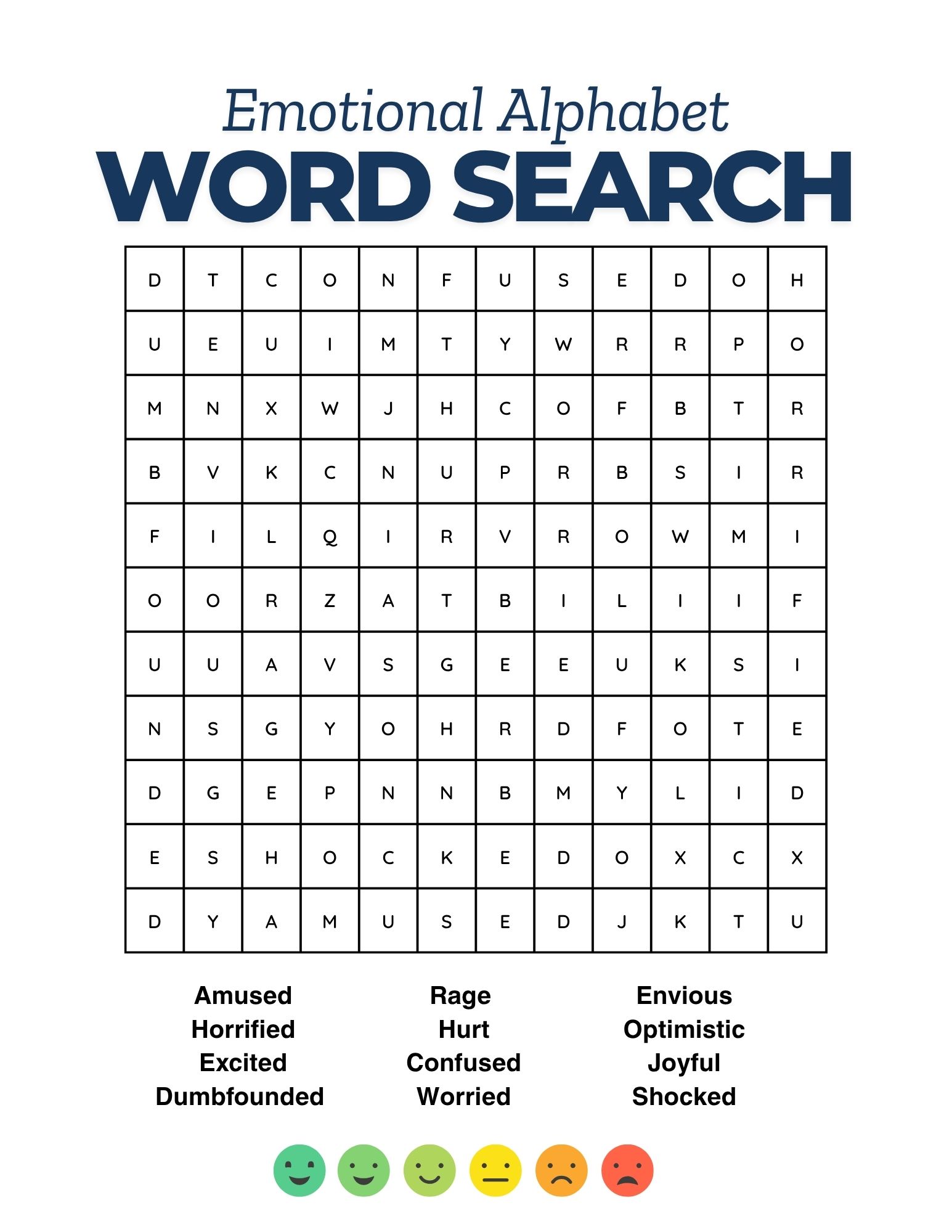
Activity: Emotional Alphabet Word Search
- Explain to students: Hidden in the puzzle below are emotion words. See how many you can find. When you spot a word, think about a time you might have felt that way. Can you use it in a sentence?
Closing:
You just found so many feeling words — and every single one of them is real, and every single one of them matters.
Here’s something important to remember: all feelings are okay. Feelings are not good or bad — they are just information. They are your inside world trying to tell you something. The more words you have to describe that inside world, the easier it is to understand yourself and to help others understand you too.
Take a moment to think about these questions. You can think quietly, talk with a friend, or write your answers down:
- Which word in the puzzle was new to you today?
- Have you ever felt that feeling before? What was happening?
- Is there a feeling word you know that was NOT in the puzzle?
- Who is someone you trust that you can share your feelings with?
- The next time you are having a big feeling, which new word might help you describe it?
There is no perfect answer to any of these questions. The point is just to notice — to pay attention to what is happening inside of you and to find the words that fit.
Keep growing your emotional vocabulary. Every new feeling word you learn is like adding a new crayon to your box. The more you have, the better you can show the world exactly who you are and how you feel.