
Boredom, frustration, and downtime (or a combination of all three) can put your students on the fast track to behavior issues. Using a proactive method like MESS can help you get ahead of behavior problems by preventing them from happening in the first place.
MESS is a proactive technique you can use to engage students in whatever you are doing — playing a game, transitioning from one room to another, classwork, art time, or anytime.
What is MESS?
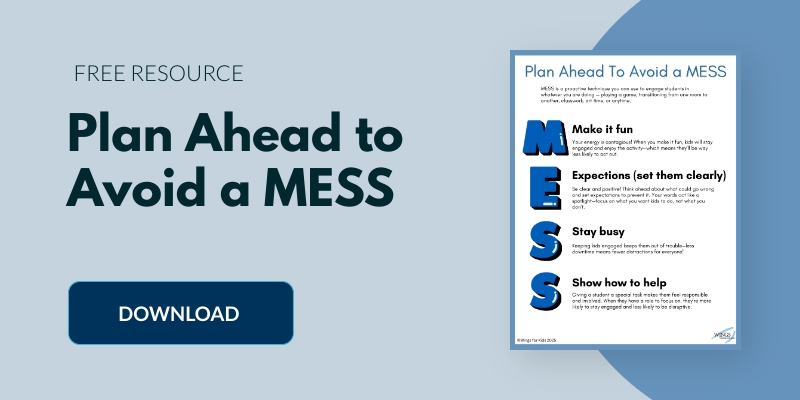
Life is messy! That’s why it is so important to plan ahead. We use this four-step technique to help avoid problematic behaviors before they begin. See how to plan ahead to avoid a M-E-S-S:
M – Make it fun
E – Expectations (set them clearly)
S – Stay busy
S – Show kids how to help
How to Implement MESS
You know how frustrating it can be when kids aren’t engaged in the activities you are attempting to do with them. To set kids up for success, MESS is a technique you can use to engage kids in whatever you are doing. All it takes is a little proactive and creative thinking. It will be easier to remember this technique when playing games or transitioning between subjects or classrooms, but be sure to always keep MESS in mind whenever you should be engaging kids.
Make it Fun
If you are making things fun then kids are going to be engaged and enjoying the activity or task which will decrease the chances of negative behaviors occurring. “Make it fun” is all about your energy level. If you act like whatever you are doing is fun and have high energy, your kids will follow suit. A little silliness on your part can go a long way! If you ask students to walk like ducks down the hall then be sure to be the most enthusiastic waddler in the flock.
Quick Tip
This doesn’t necessarily have to be long detailed games or ideas, it’s more about a simple thing you can do or say to tweak whatever you are working on and make it more engaging for students.
Example: Walking in the hallway is the task at hand. A way to “spruce it up” and make it fun would be to have the group walk like they are elephants and act like they are swinging their trunks and stomping with heavy feet.
Expectations
Setting expectations is clearly outlining what you expect. Getting in the habit of stating your expectations consistently helps to create a supportive environment where kids can be successful. Expectations should be stated before everything that you do, even if you think students should already know or you have been doing the same thing all year.
Expectations should become the norm and the kids should know what your expectations are. Here are a few things to remember when setting expectations with students:
- Be clear and specific. It’s important to think ahead of what could go wrong and set an expectation appropriately for that NOT to happen.
- Keep it positive. Remember, your words will act as a spotlight, either calling everyone’s attention (and reinforcing) something positive or emphasizing something negative. Clearly state what you expect them to do instead of calling attention to you what you don’t want them to do.
Example: “When you go into this classroom, I expect you to find a seat, keep your hands to yourselves and sit quietly until I am done giving directions. That way we can get to the fun stuff faster.”
If you set expectations while handing out supplies you will set yourself and the kids up for success. Setting the expectation that kids can’t touch the supplies before you give them permission can help you avoid lots of messes!
Stay Busy
Keeping kids consistently busy helps limit the amount of time they have to become distracting to the group. “Stay busy” can be used as easily as asking a child to help you count the number of people in the room wearing a red shirt. Or have kids tally how many times a certain word is said during a book. If you need to set up an activity, be sure to give the kids something to do while they wait. Asking kids to sit still while you prepare is unrealistic and begs for trouble.
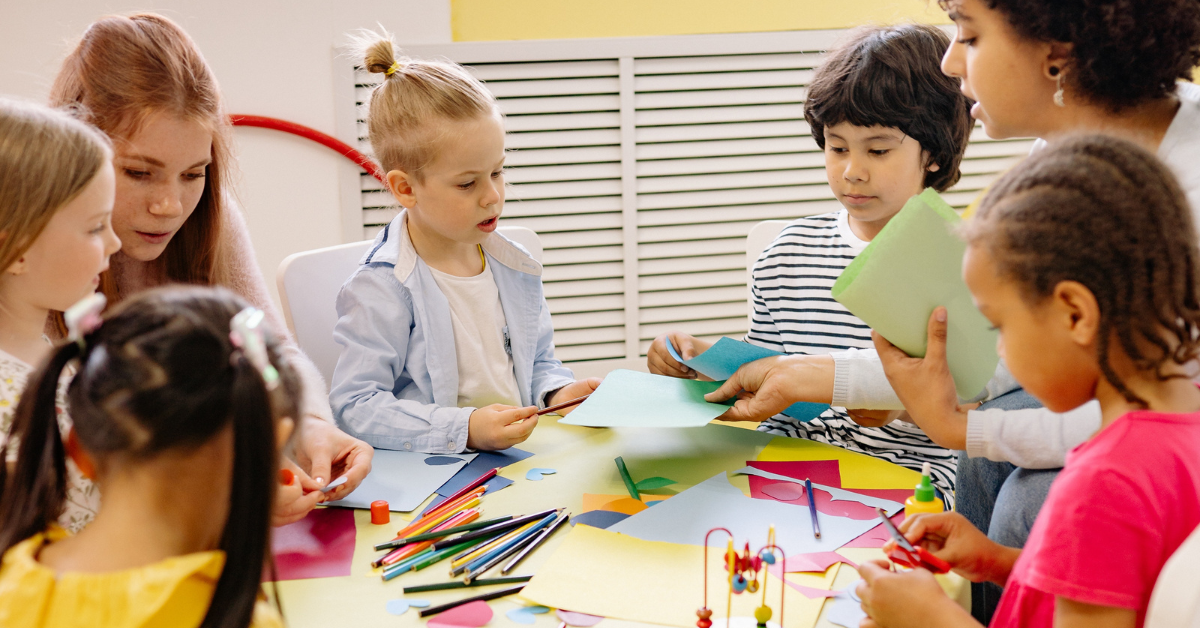
Example: “While I pass out the glue and scissors, I’d like everyone to draw a picture of what you want to be when you grow up.”
Show How to Help
Kids love to help and when you present them with opportunities to aid you they will be excited to succeed. Asking a child to hold a clipboard for you may distract them from using their hands to tap the child next to them. Putting a child in charge of passing out pencils or writing something on the board can keep them occupied during downtime. Putting a student in charge of something helps them feel ownership and responsibility, and having a duty to fulfill will help them stay engaged–making it easier for them to avoid disruptive behaviors.
Example: Jamie is finished with her art project and getting restless while she waits for others to finish. You could say, “Jamie, can you please clean your brushes and wash your hands while your paint dries on your project?”
Tips for Effective Facilitation and Implementation
- Use MESS with the whole group, or an individual student. MESS can be used anywhere, at any time, with one student, a small group, or the entire class.
- Use a single letter of MESS, a combination of the letters. Think of MESS as a mindset or habit that you’re forming. When MESS is applied often and consistently, you can spend less time and energy with behavior disruptions, and more time teaching and learning.
- Keep it simple. MESS doesn’t have to be complicated or overly creative. It can be as simple as having students line up and count the number of steps on the way to the cafeteria, or having them snap two times if they can hear you to get their attention.
- Have fun with MESS! Students will feed off your energy and enthusiasm.
Next Steps
Memorize MESS so you can quickly recall and use any of the letters at any time. Give it a try and with some practice, you’ll start seeing how MESS helps prevent negative behaviors from happening in your classroom or program. If you do experience unwanted behaviors, learn how to GET PAST them with our next helpful technique.
More Behavior Management Techniques