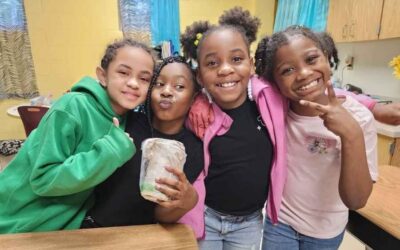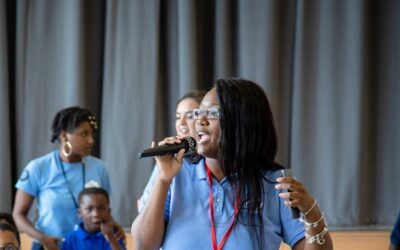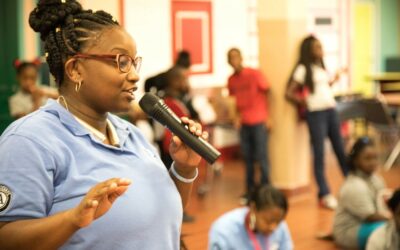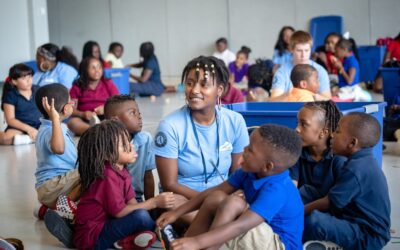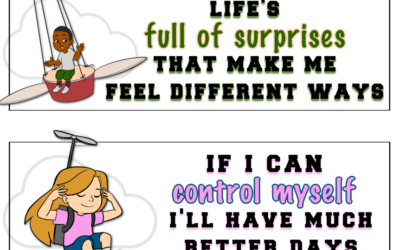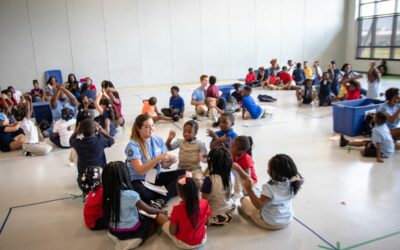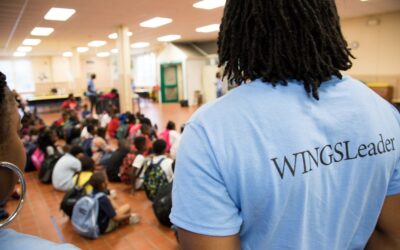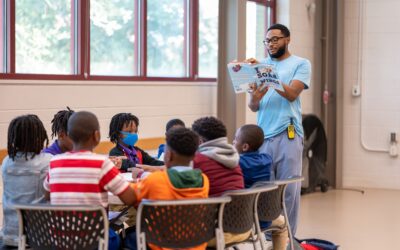
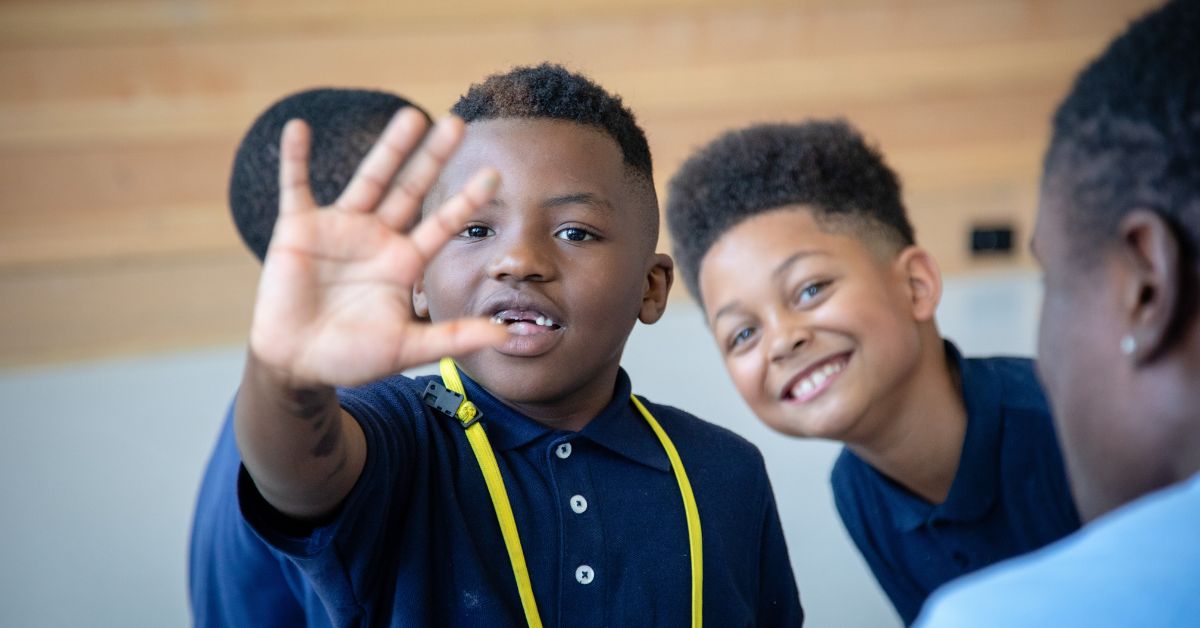
To get kids engaged and moving, many of our programs incorporate hand motions and movement to go along with Words to Live By—the core of everything we teach. On the surface, these hand motions might seem like a simple addition to help kids stay active, but there are so many wonderful benefits that develop while learning, memorizing, performing, and repeating the actions.
Here are some of the top benefits of incorporating movement into songs, rhymes, and activities:
Sustained Attention
As children’s attention spans develop, play and learning are important components in fostering and expanding a child’s ability to focus on an activity for an extended period of time. Songs or poems with hand motions are an excellent tool for improving the duration of a child’s engagement because there is a clear beginning and end.
Sequencing and Memory
Almost everything we do requires a pattern of sequencing. Tying our shoes, doing the laundry, washing our car. Sequencing is the process of combining things in a particular order, or discovering the order in which they are combined. Through learning and repeating the same song or rhyme over and over, this foundational skill grows.
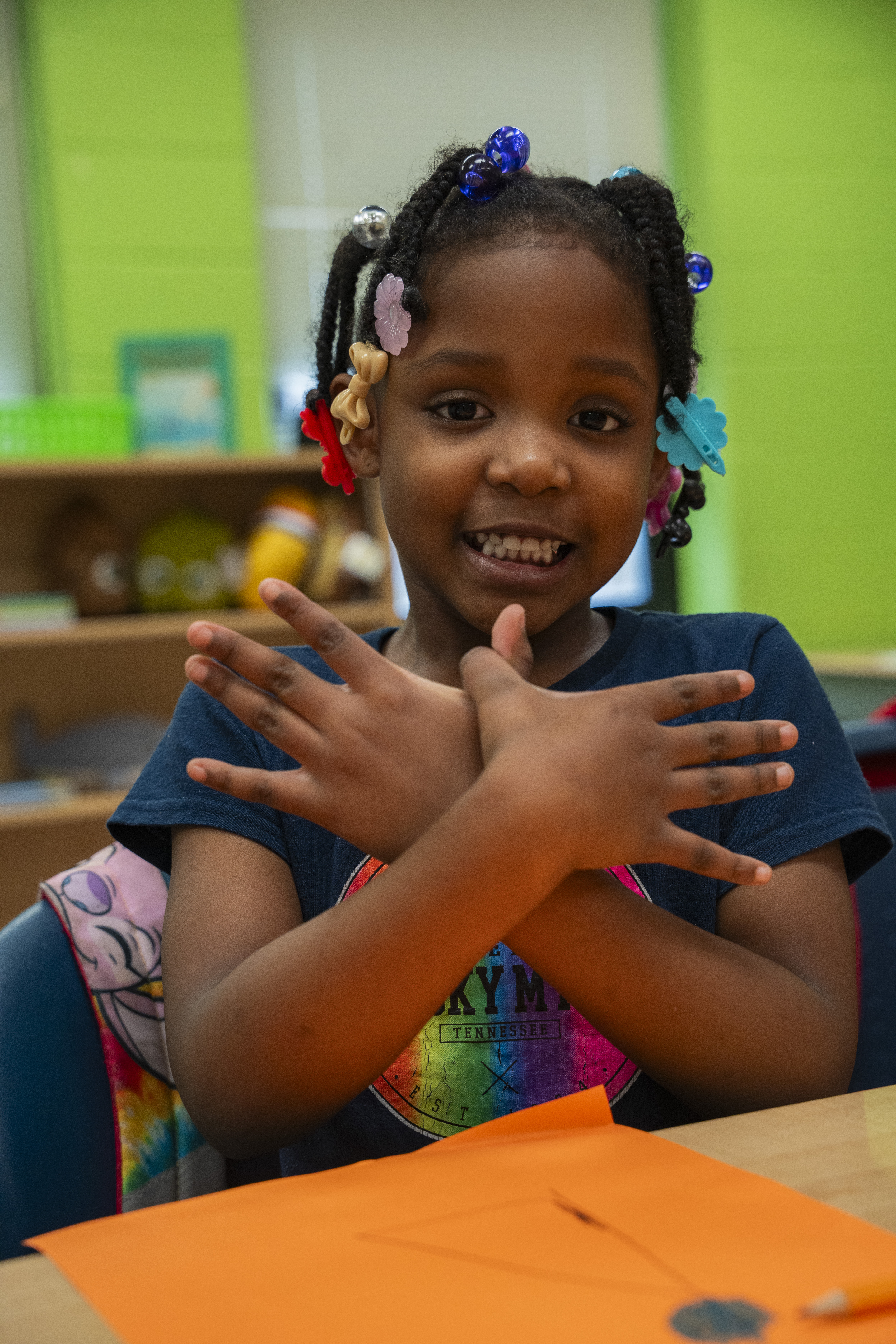
Actions must be arranged in a first, next, last order—therefore, songs and poems with hand motions also require memory. Children will naturally expect the sequence of hand motions in a song, poem, or rhyme based on what they remember through repetition. Many studies have shown that physical actions can enhance our memory and recall. Over time, kids develop the ability to organize and reorganize the information every time they recite the words or lyrics.
Social Skills
Sharing experiences as a group offers many social benefits that adults may overlook when thinking about large group activities like repeating a rhyme or a song together. Social skills like maintaining eye contact, body language, facial expressions, tone of voice, and encouraging peer participation can grow and be refined through music and movement activities. Kids who are timid in social settings can benefit greatly from group rhymes or games and songs that encourage positive social encounters—boosting their self-confidence.
Hone Gross and Fine Motor Skills
Fine motor skills control small muscle groups like pinching and grasping. Each small muscle in the hand requires repetition of various movement patterns and positions to improve dexterity and automaticity. “Finger songs”(think Itsy Bitsy Spider) target lots of fine motor movements such as finger isolations, forearm rotation, pincer motions, finger stretching and strengthening, coordination, and more. This type of coordination is essential for life skills such as writing and cutting.
Gross motor skills involve the large muscle groups—enabling movements like bending over, stretching, catching, lifting, jumping, and reaching. Whether using finger songs, or larger motions that require gross motor skills, refining the motions can help to improve coordination as the child grows.
For example, think about a song like “Head, Shoulders, Knees and Toes,” and how quickly (or not so quickly) a child can react to and place their hands on the corresponding body part. This takes practice and perseverance. These types of coordinated movements help make kids aware of how their body moves and how it relates to the space they take up.
Healthy Emotional Expression
Creative expression helps kids develop important skills like naming and identifying emotions and practice self-regulation. Feelings are unique and specific to every single one of us and how we express them is, too.
Healthy emotional expression through movement also comes with the added benefit of physical activity which has been linked to increasing well-being and uplifting our mood. How we feel affects how we interact with others. Using movement to bring the attention back to the body encourages a release of emotions in an acceptable way and supports proactive behavior management strategies.
From our time in the classroom and in programs, we know that songs or poems and gestures combined absolutely assist learning. Reciting Words to Live By out loud allows students (and adults) to feel the language, and gestures and movement help them make sense of it. Kids learn more quickly and retain the knowledge longer when they state the words loud and proud and move together.